By Fegor Ogene JP.
There is an old saying that when a drowning person finds a floating leaf, they mistake it for a rescue boat. That aptly captures the twin narratives advanced by Basil Okoh and Ejiro Awhotu. They have taken a fleeting moment, magnified it beyond recognition, and attempted to market it as the political obituary of Senator Ede Dafinone. Unfortunately for them, echoes are not earthquakes, noise is not the voice of the people, and political theatre is not a substitute for political reality.
Their articles are like building a mansion on a footprint in the sand. A few coordinated interruptions by partisan actors at a stakeholders’ meeting have suddenly become, in their imagination, the official verdict of the entire APC in Delta Central. Such reasoning is neither objective political analysis nor responsible commentary; it is wishful thinking clothed in sensationalism.
Equally untenable is the repeated claim that Senator Ede Dafinone is an “imposition.” Senator Dafinone is a duly elected Senator of the Federal Republic of Nigeria. No evidence has been presented to demonstrate that any democratic process within the APC was subverted or that party stakeholders were denied their rights. Political slogans may excite supporters, but they cannot replace fact and evidence.
The APC Delta Central Elders, Leaders and Stakeholders Meeting at the PTI Conference Centre was convened to strengthen unity, deepen collaboration, and consolidate the APC family in Delta Central, not to provide a stage for a handful of partisan actors to manufacture a misleading political narrative.
Those who attended the meeting know that the few voices that sought to interrupt Senator Ede Dafinone while he passionately reaffirmed his accessibility did not represent the mood or collective resolve of the gathering. They were neither the conscience nor the authentic voice of Delta Central APC stakeholders. Rather, to many observers, these appeared to be coordinated voices, a small pocket of pro–Ovie Omo-Agege supporters who are loyalists of some Federal Commissioners, whose apparent objective was not to contribute meaningfully to the stakeholders’ engagement but to create the impression of widespread discontent. Their actions seemed carefully calculated to provoke confusion, generate avoidable tension, and divert attention from the true purpose of the meeting.
Ironically, many among this same group are individuals who have, at different times, sought an audience with Senator Dafinone. Had their intentions genuinely been driven by dialogue rather than political theatre, they would undoubtedly have had the opportunity to engage him. Instead, they chose orchestrated disruption over constructive conversation, spectacle over substance, and factional grandstanding over the unity and progress of the APC family. It is therefore both misleading and intellectually unsound to elevate the conduct of this handful of partisan actors into the collective verdict of Delta Central APC stakeholders.
To suggest that APC Delta Central rejected Senator Dafinone because of a brief interruption by a few individuals is like declaring that the ocean has dried up because one wave splashed against the shore. It is a conclusion that cannot withstand objective scrutiny.
Both Basil Okoh and Ejiro Awhotu also betray a fundamental misunderstanding of leadership. Leadership is not measured by the volume of applause or jeers at a political gathering. It is measured by character, legislative effectiveness, accessibility, integrity, competence, and faithful service to the people. Political theatre may entertain spectators, but it does not define democratic legitimacy.
Their attempt to diminish Senator Dafinone because he is an accountant only exposes the weakness of their argument. Nations are built by competent men and women from diverse professional backgrounds. Democracy does not reserve leadership for lawyers, professional politicians, or orators. Public service is measured by performance, not profession.
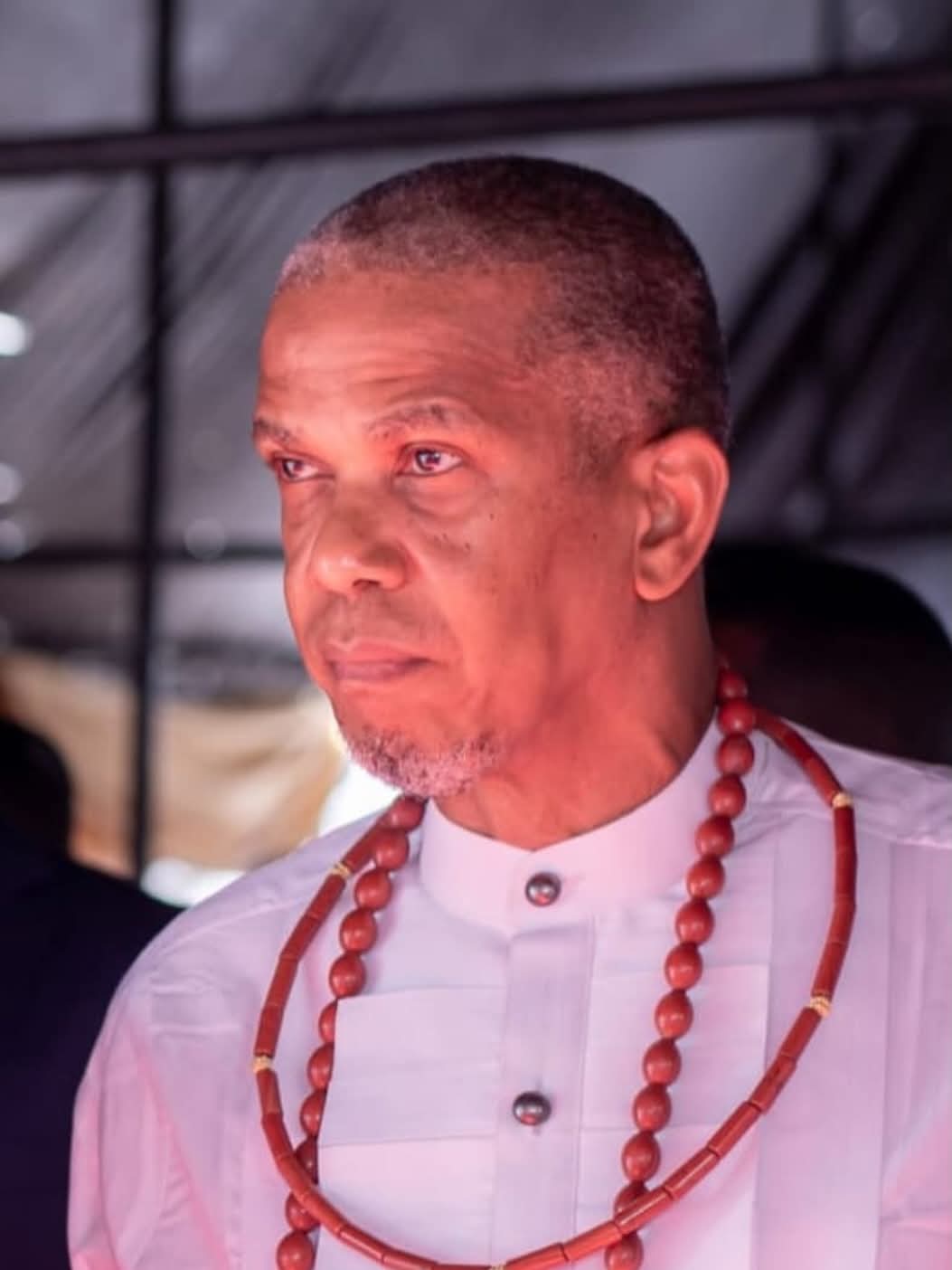
What both writers deliberately overlooked is Senator Ede Dafinone’s record of thoughtful and responsible representation. He has approached public office with the calmness of a statesman rather than the theatrics of a rabble-rouser. His politics has consistently reflected maturity, restraint, and a deep appreciation of the trust reposed in him by the people of Delta Central. While others chase headlines and political spectacles, Senator Dafinone has remained focused on the painstaking responsibilities of representation through legislative engagement, constructive advocacy, policy contributions, and initiatives designed to advance the interests of his constituents.
His service in the Red Chamber has been marked by competence, dignity, and thoughtful participation in national discourse. Rather than seeking relevance through manufactured drama, he has chosen the more demanding path of substance, demonstrating that effective representation is measured not by the loudness of one’s voice but by the quality of one’s contributions and the impact of one’s service.
Beyond the Senate floor, Senator Dafinone has consistently maintained a sincere commitment to the welfare of the people he represents. Through his accessibility, constituency engagements, and numerous interventions, he has continued to touch lives across Delta Central with humility, compassion, and genuine concern. Those who have benefited from his leadership know that his approach is rooted not in political showmanship but in faithful service, quiet effectiveness, and an unwavering commitment to improving the lives of his constituents.
Indeed, history rarely remembers those who generated the loudest noise; it remembers those who made the greatest difference. Senator Ede Dafinone’s legacy will not be defined by orchestrated interruptions or sensational commentaries but by the confidence he inspires, the people he empowers, the communities he serves, and the principled leadership he continues to provide. In an era where political theatrics often overshadow substance, his measured, sagacious, and people-oriented style of leadership remains one of his greatest strengths.
History teaches that political momentum is not created by sensational headlines or carefully edited video clips. It is earned through consistent engagement, credible leadership, and faithful service. The people of Delta Central are discerning enough to distinguish between genuine public sentiment and carefully orchestrated political theatre.
In the end, a few rehearsed voices cannot drown out the verdict of an entire constituency. Political destiny is determined by the people through democratic processes, not by a fleeting disruption amplified for partisan advantage. The APC in Delta Central is bigger than any faction, stronger than any orchestrated spectacle, and wiser than those who confuse temporary commotion with permanent conviction.
As the saying goes, an empty drum makes the loudest noise, but it is the full granary that feeds the people. When the time comes, Delta Central will judge every aspirant not by manufactured applause or rehearsed jeers, but by integrity, service, accessibility, legislative performance, and enduring commitment to the people. That and that alone is the verdict that truly matters.