By Fred Edoreh
Growing up in the 80s, one of the things we hated as children was when my father announces that we are going to our village, Umeh, our homeland and ancestral village.
We hated the trip because there was no road to the village. My father would park the car in a relation’s farmhouse by Umeh Junction, on the now East-West Road, then we would trek the 8km footpath to the village, jumping over clogs of muddy water, brushes and so on.
At dusk, we would take same stress back to the car, while my father held a torch to light the way – night insects chirping, our feet tired, and our hearts in our mouths for fear of encountering possible dangerous animals in that dark.
We loved the village: my Grandma Ige, who neither spoke nor understood a word in English but doted all over us; the fresh fish in every home we visited; Auntie Jenny’s starch, owho soup, with plantain to bite along; and swimming in the village stream. But, all that could not equate the fatigue, fright and resentment we felt.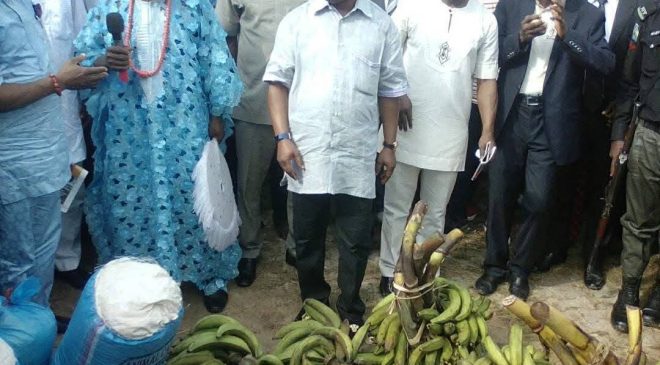
At some point, the then Local Government Chairman, Chief John Omu, graded the road, and thereafter constructed a narrow bridge across one of the streams on the route. These enabled vehicles into the village, but only when the floods had subsided down, and during very dry season, which was usually only about three months in a year.
It was bad enough that as a community of Isoko nation, we had no connection by road to our local government headquarters, Oleh, nor to any other of our brother communities. We were completely cut off.
We travel through Ughelli North, Ughelli South, and almost to Patani LGAs, before turning in to reach our village in Isoko South. But it was worse that the road was unmotorable.
The situation was so discouraging that, even at adulthood, going to the village became very distant in our thoughts. This disconnected us severely from our relations and killed family bonds, such that we virtually became strangers in our ancestral home.
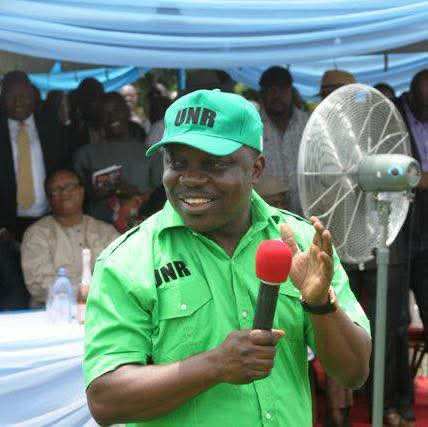
Fast forward. Sometime around 2009, our community boy, Barrister Duncan Afahokor, decided to call public attention to our plight by opening a Facebook platform called “Umeh Need Road” (UNR), to drive advocacy for the provision of road to the community.
Interestingly, not only Umeh sons and daughters, but brothers and sisters of Urhobo, Ijaw, Itsekiri, Ukwani, especially, and many other Deltans, Diasporans, and indeed the global community, subscribed to the platform in sympathy with us.
*Enter Dr Emmanual Uduaghan, Governor of Delta State*
Dr Uduaghan was an ardent but silent Social Media follower. He used it to get open reports and feel the pause of his state. In the process, the activities of the UNR page caught his attention.
He kept quietly following and reading the posts and comments on the page till he understood what the issue was.
He did not know Umeh, but could now understand that it was an Isoko community, and he felt compelled to respond to the cry of the community.
Returning to Asaba from Warri through Ughelli, after a weekend, he was moved to ask his aides:
“This Umeh sef, where e dey?”
Providence. Pastor Powell Tos, was in the trip. He has filial relationship with the community and he knew the way.
“Oga, it is just about 20 minutes drive from Ughelli to Umeh Junction, then about 8 km into the community. Problem sir, is that the road is bad and it will be impossible to get there especially this raining season,” Powell told him.
“Take me there,” Uduaghan declared.
They got to Umeh Junction in no time, but even with the land cruiser jeeps, they could not proceed further than 500 metres towards the community. The road was terrible.
They came down from the vehicles to see if they could trek in. They did a few more meters, got discouraged and decided to turn back.
*First Show of Love*
On their way to their cars, they saw some little children coming from the farm. When the children saw them, with security gears, guns and all that, they took to their heels. They had never seen such types of people before.
Uduaghan ordered that they should be brought to him. The security men chased and caught them. The children screamed for their life. Their parents rushed out from the nearby plantain farms and local palm oil mills.
The security men explained to them that it was the Governor of the state.
“Why are your children not in school at this time,” Uduaghan queried.
“The school buildings are bad, there are no teachers, and it is a lot of stress for the children to do the long swampy distance to and from the school everyday. So, we just felt that they should remain with us to farm,” the parents explained.
This drew his attention to the condition of the village primary school, an added dimension to his mission.
As a medical doctor, be took notice of the children’s pregnant mother, who notwithstanding her condition, was bending to work in the farms. He provided for her and promised to see the baby when born.
*Return Journey*
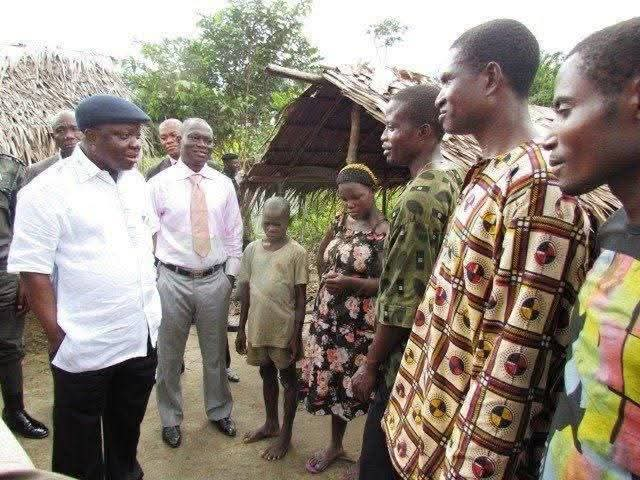
Uduaghan returned to Umeh on a later date. This time, it was dry season and they successfully drove into the community.
On that day, he asked after the pregnant woman. She had given birth to a baby born. They had named him Emmanuel, after him. He went to see the baby and also provided for his upkeep.
Then, he made the first declaration. It was not about the road. It was about the education of Umeh children: Umeh Primary shall be constructed to the best standard. That was accomplished a few months later fully fenced and painted, with a one-storey building of classrooms; two other blocks of several classrooms; all complete with desks; and another block as Headmaster and staff offices.
*Umeh Road*
Then, he made the life-changing declaration: Umeh road shall be built.
Could this be real?
Many persons mocked us that the promise was a ruse, mere photo-ops, political gimmick.
We had no choice than to believe the promise of the Governor. We developed a community creed to anchor our hope: “Faith is our compass: In God we trust.”
A few months later, Setraco came for the survey. Then we heard that the contract has bern awarded.
*More Controversies*
Notwithstanding, there were several more negative expressions. Some persons argued that the Umeh road project had been awarded earlier and that Uduaghan was duplicating the contract? He asked to see the earlier contract but no one offered any document.
Some said he was just going to use the project as a pipe to fleece money, that he will not complete the road.
Some said Umeh was too small and insignificant a community to expend N3b for a road project.
He paid deaf ears to all of the talks. He told them what he saw: a community of vast and fertile agricultural land; of strong and resilient people with huge productivity of plantain, potato, pepper, and cassava that can feed not just Delta but Nigeria; a community that has huge potential for the siting of industrial starch and plantain flour processing factories; a community of great ponds, lakes and limitless fishery and aquatic assets.
These are all evident in the regular convergence of traders and trucks from Warri, Sapele, Ughelli and Port Harcourt, to purchase these produce at Umeh Junction on Umeh Market days.
*Completion*
Contrary to the expectation of the naysayers and ill-wishers, the 8km Umeh road, with two bridges, was eventually completed and commissioned in about two years.
Since then, our people feel so much at ease to journey in and out of Umeh, sometimes three trips a day. The community is expanding rapidly as our sons and daughters now find it easy to develop various properties. The Okowa administration added the rebuilding of our secondary school, with Principal Quarter now included; Sheriff Oborevwori has brought adequate pipe borne water, and has completely knocked down and reconstructed the our health centre, the NDDC has installed solar light in most of the length and breadth of the community. A number of internal roads have been constructed, and we are expecting more.
These show how access road leads to development, but more importantly, they the power of altruist advocacy, the efficacy of faith, and the empathy of responsive leadership.
We are still highly expectant of the revival and completion of the Uzere-Umeh-Patani Road, which connects us more directly to the rest of our Isoko communities in less than 20 minutes drive, but we are holding on and protecting the Uduaghan road jealousy. It is the only way we have for now.
When the flood of 2022 threatened to collapse the bridge, Sheriff rose to promptly repair it. He has also done various interventions on the road. We are quick to cry out when we notice any crack. You can understand why. It is the same for our schools. We recently cried to Sheriff about the depreciation of some sections of the primary school and he has ordered the renovation. Faith is our compass.
*Lifetime Friend*
For us, Uduaghan came as a benevolent spirit, God seeing that “we the small” are the only “big men” of our community.
Uduaghan bonded with Umeh. He adopted the community as a second home. Just like we enjoyed swimming in the village stream, he also relished paddling in it when he surprisingly attended the community annual social carnival.
Our people appreciate him. (We cannot use that in the past tense.) Our late Odiologbo, His Royal Higness, Ambrose Odiri Owhe, first conferred on him the chieftaincy title of Ovie Elo (The Lord of Light) of Umeh Kingdom, and later elevated it to Aruthoghor (He who truly deserves to be honoured).
Today, Uduaghan is gone, but Umeh will never never ever forget such a friend, brother, father, leader, Governor and benevolent spirit.
Safe journey, Aruthoghor, Ovie Elo, Asamaigor of the people.
Your good deeds shall light your path to heaven where the holy ancestors of Umeh Kingdom are waiting to receive you, celebrate you and present you to the Almighty God as one who accomplished the divine mission of love for the development of His people.